
Spinal Decompression in South Lake Tahoe
Gentle, hands-on spinal decompression (lumbar flexion-distraction) in South Lake Tahoe that may help ease low back disc pressure, sciatica and leg pain, drug-free.
Tahoe Chiropractic Clinic
Spinal Decompression in South Lake Tahoe
If a herniated disc, sciatica, or chronic low back pain has you looking for a non-surgical option, spinal decompression at our South Lake Tahoe clinic may be a good fit. Our chiropractors use flexion-distraction, a gentle, hands-on form of spinal decompression for the low back, performed on a specialized table that lets them rhythmically stretch and decompress the lower spine. It is designed to ease pressure on irritated discs and the nerves around them without drugs, injections, surgery, twisting, or high-velocity thrusts.

How it works
What to expect with spinal decompression
- Step 1
Thorough exam first
Before your first session, our chiropractors review your history and perform orthopedic, neurological, and movement testing to identify the spinal level likely involved, rule out contraindications, and determine whether flexion-distraction is the right fit for your spine.
- Step 2
A personalized decompression plan
You get a plain-English explanation of your findings and a personalized care plan with clear goals and regular check-ins, so you always know how you're progressing.
- Step 3
Hands-on table work and exercises
Each visit combines the flexion-distraction technique with any gentle chiropractic adjustments you need and, as you progress, corrective exercises that build core support for your lower back.
Potential benefits
Benefits of spinal decompression
Non-surgical, with no incisions, anesthesia, or surgical recovery time
Drug-free care for low back disc, nerve, and leg pain
Gentle, rhythmic motion with no twisting or high-velocity thrusting
Guided by hand, so every movement is tailored to your spine
May help reduce pressure on the disc and the nerve root
Pairs naturally with chiropractic adjustments and corrective exercises
The basics
About spinal decompression
The discs in your lower back act as shock-absorbing cushions between the vertebrae. When a disc bulges, herniates, or loses height from everyday wear, it can press on nearby nerves and produce pain, numbness, or weakness that radiates into the buttock or leg. Rest, anti-inflammatories, and injections from your medical provider can help calm symptoms for some people. Flexion-distraction takes a different, hands-on approach that focuses on the mechanical load on the disc and the nerve.
The technique is meant to address that load directly, gently cycling your low back through a pumping motion that may help reduce pressure inside the disc, open the space around the nerve, and encourage healthy movement of fluid and nutrients in the disc tissue. Because every movement is guided by the chiropractor's hands rather than a machine, each session is tailored in real time to what that spinal level needs, and many patients find it comfortable and relaxing. We pair it with chiropractic adjustments and corrective exercises so your plan also supports joint motion and builds core strength.
New Patient Special
$47
Your first visit, all included. New patients welcome at Tahoe Chiropractic Clinic.
- Consultation
- Complete Chiropractic Exam
- First Adjustment
What is spinal decompression?
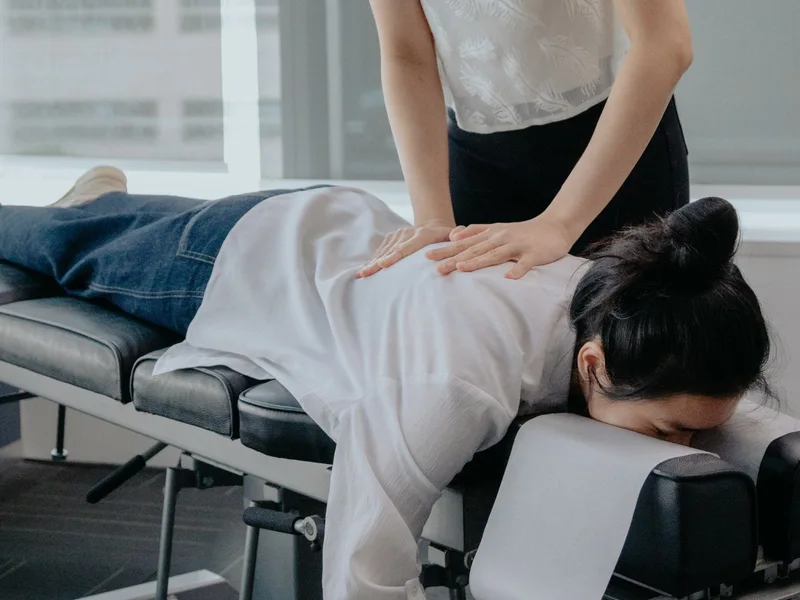
At our clinic, spinal decompression means flexion-distraction: a gentle, hands-on chiropractic technique for the low back that has been used and studied for decades as a conservative approach to lumbar disc conditions. You lie face-down on a specialized table whose lower section gently flexes under the chiropractor’s guidance. As the chiropractor moves the table through a slow, controlled distraction, they apply light pressure to the affected spinal level, producing a rhythmic pumping motion intended to decompress the disc and the surrounding joints.
The goal is to gently open the disc space, reduce pressure inside the disc (which may help a bulging or herniated disc ease away from the nerve), decrease pressure on the nerve root, and restore more normal motion to the lumbar spine, all without surgery, injections, or high-velocity thrusting. Every movement is guided by hand and adjusted moment to moment based on how your spine responds.
What to expect
Your first visit begins with an exam. Our chiropractors review your history, perform orthopedic and neurological testing, and, if you’ve had recent imaging, review the report to help identify which disc level is involved and whether decompression is the right fit. If it is, we map out a personalized plan for your spine.
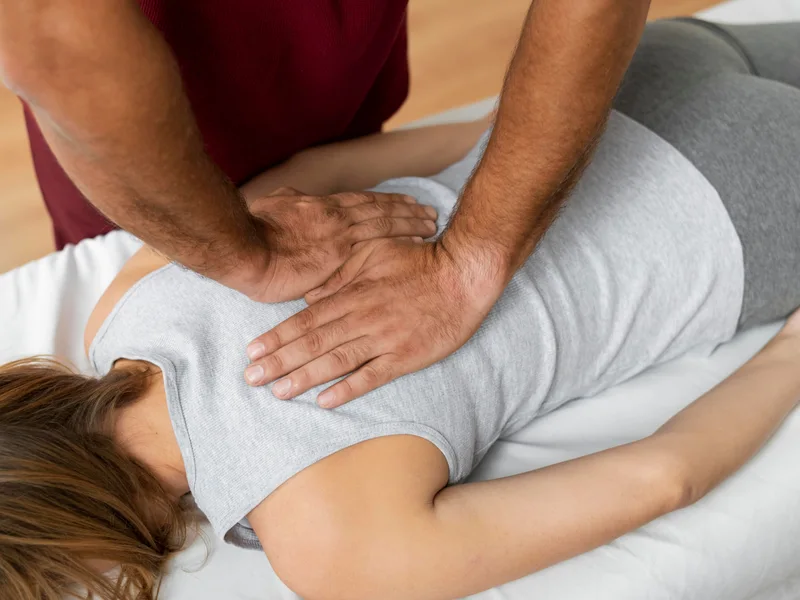
During each session you lie face-down and relaxed on the table while the chiropractor moves its lower section through a slow, rhythmic flex-and-distract cycle and applies light pressure to the target level. You’ll feel a gentle stretch across your lower back; many patients find it comfortable, and some find it relaxing. Sessions are typically combined with any gentle chiropractic adjustments you need that day, and as your pain settles, we introduce corrective exercises that strengthen the core muscles supporting your lower back, along with at-home stretches.
Who it helps
Spinal decompression may be a good fit for patients dealing with:
- Herniated or bulging discs in the lower back, including degenerative disc changes
- Sciatica, the pain, numbness, or tingling that runs from the low back into the leg
- Chronic low back pain that hasn’t fully responded to adjustments alone
- Pinched nerves in the lumbar spine, from a disc or narrowing around the nerve root
- Leg pain traced to a compressed nerve in the low back
- Older adults or anyone who prefers a very gentle approach to lower back care
It is often used as part of a combined plan: decompression aims to ease disc pressure, chiropractic adjustments support joint motion, and corrective exercises build the core stability that helps protect the disc. If your exam suggests surgery or another approach may be the better path, we’ll tell you honestly.
Why choose Tahoe Chiropractic Clinic
At our South Lake Tahoe clinic, we look for the source of your pain, not just the symptom, and we care about keeping you active long after the pain settles. Our chiropractors combine hands-on spinal decompression, gentle chiropractic care, and corrective exercises into one clear plan built around your exam findings, so you get a straight answer about what’s driving your pain and a realistic plan for getting back to the activities and people you love.
Ready to see if decompression is right for your back or sciatic pain? Our New Patient Special makes your first visit easy, and you can request an appointment or call our office at (530) 541-5660.
What it helps
Conditions we treat with spinal decompression
What kind of spinal decompression do you offer?+
We use flexion-distraction, a gentle, hands-on form of spinal decompression for the low back. You lie face-down on a specialized table while the chiropractor slowly flexes and distracts your lower spine in a rhythmic, pumping motion intended to decompress the discs, ease nerve pressure, and improve mobility, all without forceful thrusts.
Is spinal decompression safe?+
Flexion-distraction is a gentle, non-invasive, drug-free technique and is generally considered safe when performed by a trained chiropractor. We examine every patient before starting and screen for contraindications such as recent fractures, certain tumors, and severe osteoporosis, so care is appropriate for you.
What does decompression feel like?+
Many patients find it comfortable or even relaxing, a slow, gentle stretch and release across the low back with no sharp pulling or twisting. Because the force is light and guided by the chiropractor's hands, it is less likely to cause the soreness that sometimes follows high-velocity adjustments. Some people notice mild muscle fatigue afterward, which is normal and usually short-lived.
How many sessions will I need?+
It depends on how long you've had the problem and how your spine responds. After your exam, we give you a personalized plan with clear goals and check your progress along the way, adjusting the plan as you improve.
Will my insurance cover spinal decompression?+
Call our office to ask about insurance and payment options. Our front desk team is happy to answer billing questions before your first visit.
Can decompression help a herniated or bulging disc?+
It may. Flexion-distraction aims to gently open the disc space and reduce pressure inside the disc, which may take pressure off the nerve and ease the pain, numbness, or tingling it can cause. It is used most often for the lumbar disc problems behind low back pain and sciatica.
Can spinal decompression help my sciatica?+
It may. Sciatica is commonly caused by pressure on a nerve root in the low back from a disc or a narrowed space around the nerve. By gently opening the disc space and easing that pressure, flexion-distraction aims to address the mechanical source of the leg pain.
Is flexion-distraction the same as motorized decompression or traction?+
No. Motorized decompression and traction machines pull the spine using a computer-controlled table and a harness. Our spinal decompression is flexion-distraction, which is entirely hands-on. The chiropractor controls every movement in real time, which allows precise targeting of individual spinal segments and makes it a gentler option for many patients.
Who is not a candidate for spinal decompression?+
Patients with recent spinal fractures, spinal fusion hardware in the low back, severe osteoporosis, or active cancer in the spine are typically not candidates for this technique. If you're pregnant, let us know at your exam so we can recommend the approach that best fits your stage of pregnancy. Your exam covers all of these, so we only proceed when it's the right choice.
How do I know if my back pain is disc-related?+
Disc pain often radiates into the buttock or leg (sciatica), worsens when sitting or bending forward, and may include numbness or weakness. An orthopedic and neurological exam helps our chiropractors identify the likely source and tell you whether decompression is the right tool. If you already have imaging, bring the report with you, since it can help us target the right level.
What is spinal decompression used for?+
We use it for low back conditions such as herniated and bulging discs, degenerative disc changes, sciatica, pinched nerves in the lumbar spine, facet irritation, and chronic low back pain that hasn't responded to other conservative care. We're honest about what to expect and will tell you if surgery or another approach may be the better path.
What should I do at home between sessions?+
Stay gently active, and walking is ideal. Avoid prolonged sitting or bending that worsens your symptoms. Our chiropractors will give you specific stretches and posture tips to support your progress between visits.
Explore more
Related services
Patient reviews
What our South Lake Tahoe patients say
“Most amazing experience! I was in a lot of pain and in fear of doctors but when I walked in I felt at home. The energy was amazing ,anybody come visit.”
“La atención del doctor y el resto de personal es maravillosa, son muy atentos. Los recomiendo !”
“Dr Joel and staff were very helpful, thorough, and friendly! Extremely reasonable price for new patient walk in and felt very light and adjusted after the session. Highly recommend to everyone looking for an exceptional chiropractic visit!”