Scoliosis Treatment in South Lake Tahoe
Scoliosis care in South Lake Tahoe, CA. Our chiropractors help manage pain, posture, and mobility with gentle, drug-free care for kids, teens, and adults.
Chiropractic care for scoliosis
A whole-body look at your scoliosis
Also known as: Spinal Curvature, Curvature of the Spine
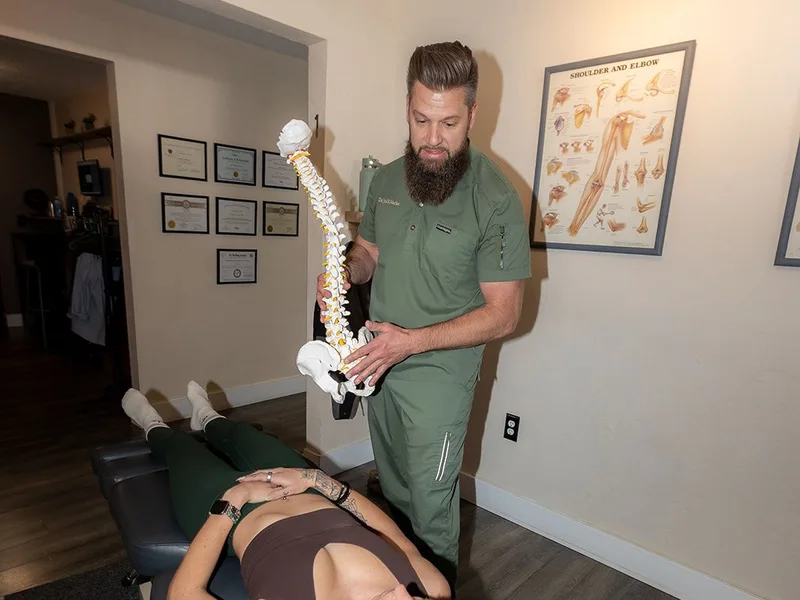
Scoliosis — a sideways curvature of the spine — can show up at any age, from a growing teenager to an adult whose spine has changed over the years. Chiropractic care won't straighten a curved spine, but at Tahoe Chiropractic Clinic in South Lake Tahoe our chiropractors take a gentle, evidence-informed approach to help manage the symptoms that often come with it: easing discomfort, supporting posture and mobility, and helping you stay active alongside any other care you're already receiving.
Symptoms of scoliosis
- ✓Uneven shoulders, with one noticeably higher than the other
- ✓Uneven hips or a visible tilt in the pelvis
- ✓One shoulder blade that sticks out more than the other
- ✓A visible curve or "S" shape when viewed from behind
- ✓Persistent mid- or low-back pain and muscle fatigue
- ✓Reduced range of motion and stiffness through the spine
Common causes
- Idiopathic (unknown cause) — the most common type, typically appearing during adolescent growth spurts
- Congenital scoliosis from vertebrae that formed abnormally before birth
- Degenerative scoliosis from disc wear, arthritis, and bone loss in adults
- Neuromuscular conditions such as cerebral palsy or muscular dystrophy
- Muscle imbalance or postural habits that can cause a functional (non-structural) curve
- Leg-length inequality causing a compensatory pelvic tilt and functional spinal curve
- Osteoporosis-related vertebral compression in older adults
Our approach
How we treat scoliosis in South Lake Tahoe
- Step 1
Thorough evaluation
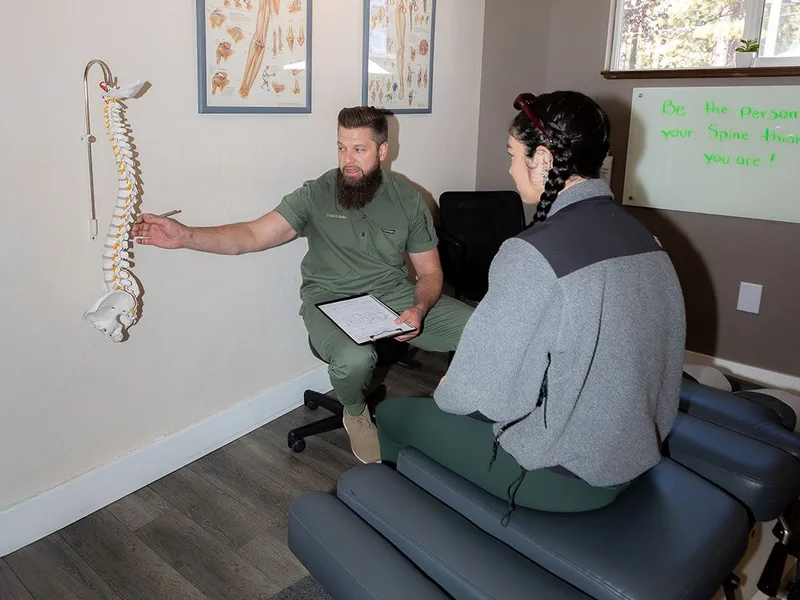
We review your history, any prior imaging, and your current symptoms, then perform a detailed postural, movement, and neurological assessment to understand your curve pattern and its effect on daily life, so we can set honest, realistic goals together.
- Step 2
A personalized management plan
You receive a clear explanation of what we found, what chiropractic care can realistically help with, and an individualized plan that works alongside any bracing or orthopedic care you're receiving. We refer when it's in your best interest.
- Step 3
Gentle care & supportive exercise
We use gentle adjustments to help improve spinal mobility and ease discomfort, combined with corrective exercises that strengthen the supporting muscles, to help you move and feel better day to day.
The basics
Understanding scoliosis
Scoliosis is defined as a lateral (sideways) curvature of the spine measuring 10 degrees or more on standing spinal imaging. In most people no specific cause is found — this is called idiopathic scoliosis, and it most commonly appears during the growth spurt of early adolescence. Adults can also develop degenerative scoliosis as discs wear unevenly and vertebrae begin to shift over time, often layering new pain on top of an already-complicated spine.
It is important to be clear about what chiropractic care can and cannot do for scoliosis. Chiropractic does not straighten a curved spine and has not been shown to prevent curve progression. What it may help with is managing the consequences of an abnormally curved spine: chronic muscle tension, restricted joint mobility, postural fatigue, and pain. By keeping the joints moving as well as possible and strengthening the muscles that support the spine, many people find their daily comfort and function improve. Moderate and severe curves, or any curve that appears to be progressing in a child or teen, need care from an orthopedic specialist, and we refer whenever that's in your best interest.
New Patient Special
$47
Your first visit, all included. New patients welcome at Tahoe Chiropractic Clinic.
- Consultation
- Complete Chiropractic Exam
- First Adjustment
Types of scoliosis we see
“Scoliosis” covers several distinct patterns, and what’s driving your curve shapes what conservative care can realistically offer.
- Adolescent idiopathic scoliosis — the most common type, appearing during the growth spurt of early adolescence with no identifiable cause. Chiropractic care may help support comfort and mobility alongside orthopedic monitoring, and we stay in step with your child’s orthopedic team if the curve is still progressing. Related: back pain.
- Degenerative (de novo) scoliosis — develops in adults as discs wear unevenly and vertebrae shift, often layering significant back pain and stiffness on top of the curvature. Many people find gentle adjustments and corrective exercise help ease pain and support function.
- Postural or functional scoliosis — a reversible curve caused by muscle imbalance, leg-length inequality, or habitual posture rather than a structural change in the vertebrae. Corrective exercise and posture work may help reduce the pattern when the underlying imbalance is addressed.
- Neuromuscular scoliosis — curves secondary to conditions such as cerebral palsy or muscular dystrophy. These typically require specialist-led management; chiropractic care may play a supportive role when appropriate.
We’ll help identify your curve type during your evaluation and be straightforward about where conservative care fits in your overall plan.
What to expect at your first visit
Your first appointment is an evaluation, not just a treatment session — we need to understand your curve and how it affects you before making a plan. Here’s how it goes:
- Review your history and imaging — we go through any prior imaging and reports, how long you’ve had the diagnosis, and how symptoms have changed over time.
- Postural and movement assessment — we look at how your spine is moving, where muscle tension or weakness is concentrated, and how the curve is affecting your posture day to day.
- Honest goal-setting — you’ll leave with a clear picture of what chiropractic care may realistically help with (pain, mobility, muscle balance) and what it cannot do (structural correction, stopping progression).
- A personalized management plan — an individualized outline of care that works alongside any bracing, orthopedic, or other providers on your team.
If conservative care isn’t the right fit for your presentation, we’ll tell you, and refer you to the right provider.
Conservative, drug-free scoliosis care
Medication can quiet pain for a few hours; surgery is a major undertaking generally reserved for curves above roughly 40–50 degrees or rapidly progressing cases. For the many people in between, living with mild to moderate scoliosis that causes real daily discomfort, there is another path.
At Tahoe Chiropractic Clinic, conservative scoliosis management focuses on three goals: help ease pain without drugs, help improve how the spine moves despite the curve, and build the muscular support that makes everyday activity easier. We use gentle chiropractic adjustments to help restore mobility to restricted spinal and rib joints, and corrective exercise to address the muscle imbalances that often come with the curve. For patients whose scoliosis is wrapped up in broader back pain or neck pain, we address those together rather than treating them as unrelated problems.
We’re honest that this approach manages symptoms rather than changing the curve, and that’s a meaningful distinction. But for people who want to stay active, whether that means hiking, paddleboarding, skiing, or keeping up with their kids, and who want to rely less on pain medication, many people find it makes a real difference.
When to see a chiropractor in South Lake Tahoe
You don’t have to be in severe pain to benefit from a scoliosis consultation. Consider requesting an evaluation if you notice:
- Persistent mid- or lower-back pain or fatigue that you’ve been told is “just from your curve”
- Uneven shoulder or hip height, or one shoulder blade that protrudes more than the other
- Increasing stiffness or loss of flexibility through the trunk
- Back pain that limits your work, sleep, or time on the trails, the slopes, or the water
- You’ve been diagnosed and want to explore conservative, drug-free symptom management
- Your child or teen has a diagnosed curve and you’d like supportive care alongside orthopedic monitoring
During your first visit we review any existing imaging, perform a thorough postural and movement assessment, and give you an honest picture of what chiropractic care may realistically accomplish for your specific presentation. If conservative care isn’t the right fit, we’ll tell you, and point you in the right direction.
Why South Shore families choose Tahoe Chiropractic Clinic
Tahoe Chiropractic Clinic is a chiropractic and whole-family wellness practice on Harrison Ave in South Lake Tahoe, caring for patients from childhood through adulthood. Our chiropractors, Dr. Emma Freeze and Dr. Joel Mackes, see patients from around the South Shore, including Meyers, Stateline, Zephyr Cove, and Kingsbury, and from Minden, Gardnerville, and Carson City. We’re upfront about what chiropractic care can and can’t do for scoliosis, and we focus on what it may help with: gentle chiropractic adjustments to support joint mobility and ease discomfort, and corrective exercise to build the muscular support your spine needs to function well despite its curve.
For children and teens, Dr. Emma Freeze has a special interest in pediatric care and is a member of the International Chiropractic Pediatric Association (ICPA). Every young patient’s care starts with a review of their health history and an assessment of whether chiropractic care is appropriate.
Many scoliosis patients also carry a heavy load of low back pain, and we address both together rather than treating them as separate problems. Because scoliosis management is often a long-term relationship, we keep your care plan honest, check in regularly, and work alongside any other providers on your team.
Ready to find out whether chiropractic care is a good fit for your scoliosis? Our New Patient Special is a simple way to get started. Call our office at (530) 541-5660 or request an appointment.
Why choose chiropractic
How conservative chiropractic care compares
| Comparison factor | Chiropractic Care | Pain Meds & Surgery |
|---|---|---|
| Aims to ease pain without drugs | ✓Gentle adjustments and exercise may help | Medication eases symptoms; surgery is reserved for curves that need it |
| Supports posture and mobility | ✓A focus of care | Not always addressed directly |
| Strengthens supporting muscles | ✓Corrective exercise included | Not always part of the plan |
| Monitoring | ✓Check-ins on comfort and function | Orthopedic imaging to track the curve (we refer for this) |
| Works with other providers | ✓Works alongside your orthopedic or medical providers | Your orthopedic team leads curve management |
| Best suited for | ✓Comfort, mobility, and function | Severe or progressing curves that need bracing or surgery |
Treatment options
Services that may help with scoliosis
Chiropractic Care
Chiropractic care in South Lake Tahoe focused on whole-body wellness, with individualized adjustments to help you move well, stay active, and feel your best.
Learn more →Pediatric Care
Pediatric chiropractic care in South Lake Tahoe for infants and growing children, using gentle, age-appropriate techniques tailored to each child's needs.
Learn more →Related conditions
Other conditions we treat in South Lake Tahoe
Patient reviews
What our South Lake Tahoe patients say
“Most amazing experience! I was in a lot of pain and in fear of doctors but when I walked in I felt at home. The energy was amazing ,anybody come visit.”
“La atención del doctor y el resto de personal es maravillosa, son muy atentos. Los recomiendo !”
“Dr Joel and staff were very helpful, thorough, and friendly! Extremely reasonable price for new patient walk in and felt very light and adjusted after the session. Highly recommend to everyone looking for an exceptional chiropractic visit!”
Can a chiropractor fix scoliosis?+
No — chiropractic care cannot straighten a curved spine or reverse structural scoliosis. What it may help with is managing your symptoms by easing pain, improving how your spine moves, addressing muscle imbalances, and supporting your posture and function. For moderate or severe curves, or curves that are actively progressing, we work alongside your orthopedic provider and refer for bracing or surgical evaluation when that's the right next step.
Is scoliosis painful?+
It depends on the degree of curvature and the individual. Mild scoliosis is often painless, while moderate to severe curves can cause chronic back pain, muscle fatigue, and restricted movement — especially in adults where degenerative changes layer on top of the curvature. If scoliosis is causing you pain, chiropractic care may help you manage it.
Can chiropractic stop scoliosis from getting worse?+
Chiropractic care is not proven to halt curve progression, and we won't promise that. What we can do is help keep your spine moving well, reduce muscular strain around the curve, and check in on your comfort and function over time. If we see signs of progression, we'll refer you promptly for orthopedic evaluation and imaging.
What types of scoliosis do you treat?+
Chiropractic care is most often used for adults with mild to moderate idiopathic or degenerative scoliosis, and for children and teens with idiopathic curves whose families want gentle, supportive care alongside orthopedic monitoring. We'll be upfront about whether chiropractic care is appropriate for your specific case.
Will I need imaging before treatment?+
If you have existing imaging or reports, please bring them; they're very helpful. If you don't, we'll assess whether imaging would change your care and refer you for it if so.
How is scoliosis diagnosed?+
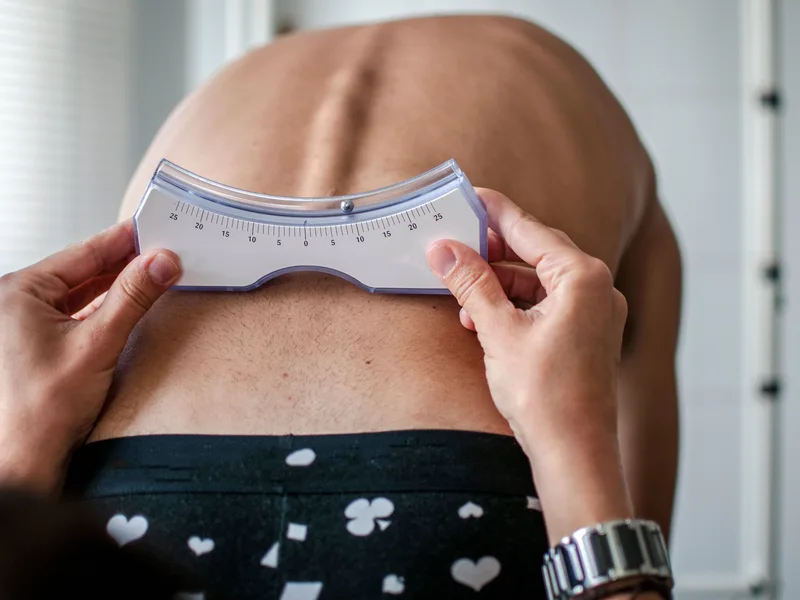
Diagnosis typically involves a physical exam, including the Adams forward-bend test, and standing full-spine imaging to measure the curve (the Cobb angle). If you haven't been formally diagnosed, we can screen you during your exam and refer you for imaging as needed.
Is chiropractic safe for adolescents with scoliosis?+
Chiropractic care is generally considered safe for many adolescents with scoliosis when it's appropriate for their condition, gentle, and adapted to their age and size. Your child's safety comes first. Our chiropractors will review your child's health history and assess their needs to determine whether chiropractic care is appropriate, and we work alongside any orthopedic team already monitoring the curve, which matters most when a growing child's curve may still be changing.
Do you treat adults with scoliosis?+
Yes. Degenerative scoliosis in adults often causes back pain and stiffness, and many people find gentle adjustments and corrective exercise help them stay comfortable and active. We see adults from South Lake Tahoe, Meyers, Stateline, and the surrounding area.
How many visits will I need?+
After your evaluation, your chiropractor will recommend an individualized plan and explain what to expect. Scoliosis management is often an ongoing relationship rather than a short-course fix, so we'll check in regularly and adjust your plan based on how you're responding.
Do you refer out for severe scoliosis?+
Yes. Curves above roughly 40–50 degrees, curves that are progressing in a growing child or teen (where bracing may be considered), or cases involving neurological symptoms call for orthopedic or neurosurgical evaluation. We will refer promptly and can continue to support you with complementary chiropractic care if appropriate.