
Whiplash Treatment in South Lake Tahoe
Whiplash care in South Lake Tahoe after car crashes, icy-road spinouts, or hard falls. Gentle, drug-free chiropractic to help restore comfortable neck motion.
Chiropractic care for whiplash
A whole-body look at your whiplash
Also known as: Whiplash-Associated Disorder, Neck Sprain, Auto-Injury Neck Pain
If you were rear-ended, slid on an icy road, took a hard fall on the slopes, or were in any collision — even a low-speed one — whiplash can leave your neck stiff and painful, sometimes for longer than you'd expect. At Tahoe Chiropractic Clinic in South Lake Tahoe, our chiropractors take a careful history, examine your cervical spine thoroughly, and build a gentle, drug-free recovery plan aimed at restoring comfortable motion and lowering the chance of lingering neck pain.
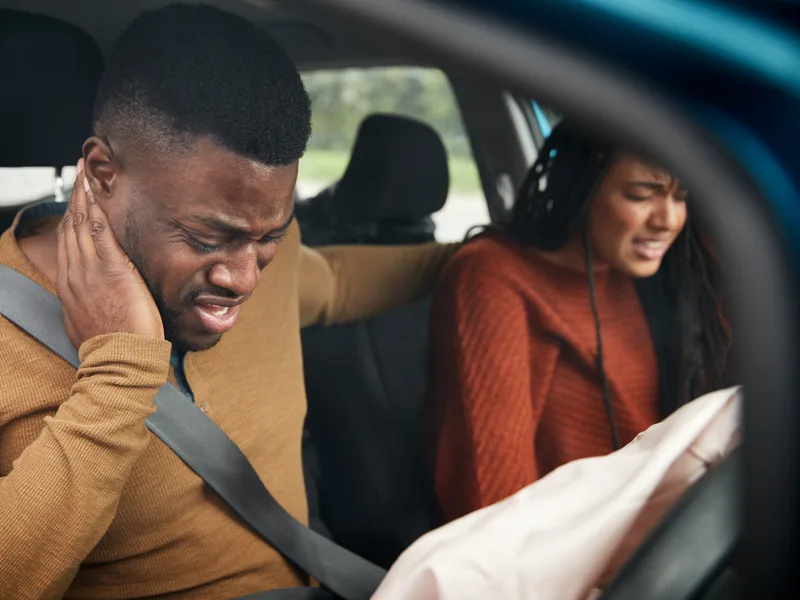
Symptoms of whiplash
- ✓Neck pain and stiffness that may develop hours or days after the collision
- ✓Limited range of motion — difficulty turning or tilting the head
- ✓Headaches starting at the base of the skull and radiating forward
- ✓Shoulder, upper-back, or interscapular pain and tightness
- ✓Tingling, numbness, or weakness into the arms or hands
- ✓Jaw pain or clicking (TMJ involvement can occur after whiplash)
- ✓Dizziness, difficulty concentrating, or sleep disturbances
Common causes
- Rear-end and side-impact car accidents (most common cause)
- Head-on collisions and T-bone impacts
- Sports falls and collisions — skiing, snowboarding, mountain biking, hockey, and contact sports
- Slip-and-fall injuries where the head snaps suddenly, including falls on snow and ice
- Amusement-park rides or any rapid acceleration-deceleration event
- Physical assault or being struck in the head or neck
- Pre-existing disc disease or arthritis that can make the injury worse
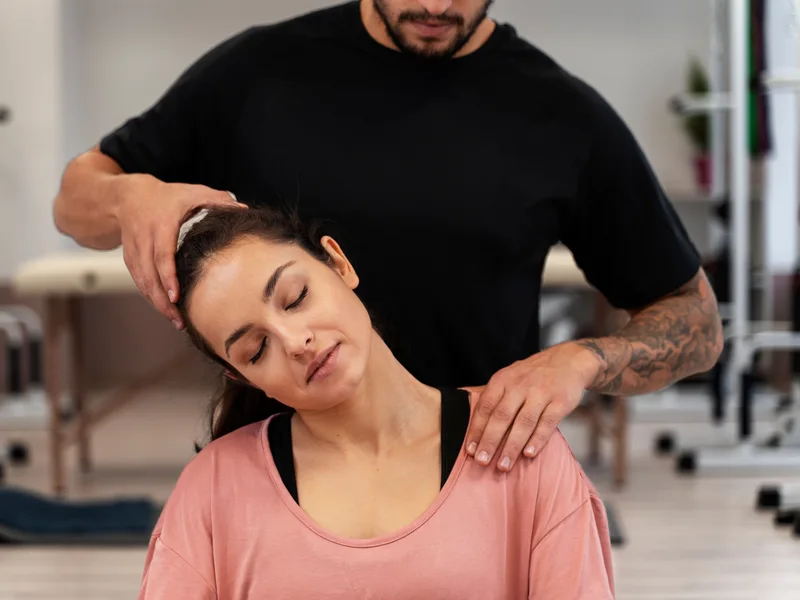
Our approach
How we treat whiplash in South Lake Tahoe
- Step 1
Thorough exam and screening
We take a detailed history of the accident or fall, perform orthopedic and neurological testing, and screen for anything that needs medical attention or imaging before any hands-on care begins.
- Step 2
A clear, personalized recovery plan
You leave your first visit knowing what was likely injured, what recovery may look like, and the specific steps we recommend — gentle adjustments and corrective exercise — to help restore comfortable neck motion.
- Step 3
Progressive exercise and recovery
As pain and spasm settle, we add at-home corrective exercises that can help rebuild cervical strength and stability, which may support a fuller recovery and lower the chance of residual stiffness or recurring flare-ups.
The basics
Understanding whiplash
Whiplash happens when a sudden force — most commonly a rear-end collision — whips the head rapidly back and forth, faster than the neck's muscles can react to protect it. That rapid acceleration-deceleration motion can stretch and tear muscles, ligaments, and joint capsules in the neck, and can also strain the discs and irritate nerve roots. Clinicians often grade whiplash-associated disorders on a scale: neck pain and stiffness alone (Grade I), pain with reduced motion and tenderness (Grade II), neurological signs (Grade III), and fracture or dislocation (Grade IV). Most people fall into Grades I–II, where conservative care, including chiropractic, is commonly recommended.
One of the most important things to understand about whiplash is that symptoms are often delayed. The rush of adrenaline after a crash or fall can mask pain, and the real stiffness, headaches, and restricted motion may not appear for hours or even a few days. That delay leads many people to skip care, only to find themselves with lingering neck pain months later. Early evaluation, even when you feel "okay," gives you a clear starting point and lets gentle care begin before stiffness and protective muscle guarding set in.

New Patient Special
$47
Your first visit, all included. New patients welcome at Tahoe Chiropractic Clinic.
- Consultation
- Complete Chiropractic Exam
- First Adjustment
Types of whiplash injuries we treat
Whiplash is not a single, uniform injury. The structures involved and the severity depend on collision speed, direction, head position, and individual factors. We help patients with:
- Grade I–II cervical strain — the most common presentation; soft-tissue pain and restricted motion with no neurological deficit. Many people respond well to chiropractic adjustments and corrective exercise.
- Cervicogenic headaches after whiplash — headaches that originate from the upper cervical joints and muscles, often one-sided, starting at the base of the skull.
- Whiplash-associated disc injury — the same force that strains muscles can bulge a disc or aggravate pre-existing disc disease.
- Referred arm pain and nerve irritation — when facet joints or a disc irritate a nerve root, pain, tingling, or weakness can radiate into the shoulder and arm (see neck pain with arm symptoms).
- Whiplash with upper-back involvement — many rear-end collisions also strain the thoracic spine and ribs, producing upper and mid-back pain alongside neck pain.
- Occupational or on-the-job accident whiplash — if the accident happened while you were working, let us know when you call; see our work injury page.
When to see a chiropractor in South Lake Tahoe
The most important thing to know: do not wait to see how you feel. Whiplash symptoms are often delayed, sometimes appearing hours or even days after the collision, once adrenaline has worn off and inflammation has set in. By that time, muscle guarding and swelling may already be working against healing.
Book an exam promptly if you were in any collision — even a low-speed fender-bender or a hard fall on the slopes — and especially if you notice:
- Stiffness or pain when turning or tilting your head
- Headaches at the back of your skull that were not there before the accident
- Aching or tightness across your shoulders or upper back
- Tingling, numbness, or a heavy feeling in your arms or hands
- Dizziness, difficulty focusing, or unusual fatigue
- Jaw pain or clicking that started after the collision
Red-flag warning: If you have severe pain with any neurological symptoms (loss of strength, loss of bladder or bowel control, or signs of a stroke), seek emergency evaluation immediately before chiropractic care. We screen for these findings on every first visit and will refer you without hesitation if warranted.
What to expect at your first visit
Your initial appointment is focused on a thorough evaluation before any treatment begins. We will:
- Take a full injury history — the direction of impact, speed, head position at the moment of collision or fall, any airbag deployment, and the timeline of your symptoms.
- Perform orthopedic and neurological testing — range-of-motion measurements, muscle-strength testing, and nerve-tension tests to help identify which structures were injured.
- Screen for red flags — we look for signs that need imaging or emergency evaluation (fracture, ligament instability, neurological deficit) before any hands-on care.
- Explain what we found — in plain English, with a personalized recovery plan and home-care guidance for the days ahead.
- Begin gentle care when appropriate — if the exam shows care is appropriate, your first gentle adjustment may happen before you leave.
You will walk out knowing what was likely injured and what your recovery plan looks like.
Drug-free whiplash recovery — without medication or surgery
The conventional response to whiplash — muscle relaxants, NSAIDs, and sometimes a cervical collar — can ease pain for a few days but isn’t designed to restore joint motion or prevent lingering stiffness. Surgery is rarely needed for Grade I–II whiplash.
Chiropractic care takes a different approach: gentle spinal manipulation aims to restore normal movement to the facet joints of the cervical spine, which may help reduce nerve irritation and ease the pain-spasm cycle. Corrective exercise can help rebuild the deep cervical stabilizers that support the spine and may lower the risk of re-injury. The goal is a neck that moves more freely, hurts less, and holds up over time — without relying on medication or surgery.
If your exam ever reveals something that needs medication, imaging, or a specialist, we will tell you honestly and refer you promptly.
Why South Shore patients choose Tahoe Chiropractic Clinic
Patients from South Lake Tahoe, Meyers, Stateline, Kingsbury, and Zephyr Cove come to us after car accidents, icy-road spinouts, and hard falls on the slopes because we take the time to understand exactly how they were hurt and build a recovery plan specific to their injury — not a one-size-fits-all whiplash protocol. Our chiropractors combine gentle chiropractic adjustments with at-home corrective exercise, and we explain every step so you know what to expect. If you were hurt in a car accident, call our office and we can talk through your situation.
Whether your accident happened yesterday or your symptoms appeared days later, now is a good time to be evaluated. Visit our New Patient Special to get started, call (530) 541-5660, or request an appointment.
Why choose chiropractic
Chiropractic care vs. the typical whiplash response
| Comparison factor | Chiropractic Care | Pain Meds & Surgery |
|---|---|---|
| Looks for contributing factors | ✓Assesses injured joints & soft tissues; aims to restore motion | Medication eases symptoms; surgery is reserved for rare, severe injuries |
| Drug-free and non-invasive | ✓Always | No |
| Encourages active recovery | ✓Guided movement & home exercises | May include rest or a soft collar |
| Risk of side effects | ✓Generally low | Can be higher (medication side effects, surgical risks) |
| Focus on range of motion | ✓A core focus of care | Not the main focus |
| May help lower chronic-pain risk | ✓Early, active care may help | Long-term outcomes vary |
Treatment options
Services that may help with whiplash
Related conditions
Other conditions we treat in South Lake Tahoe
Patient reviews
What our South Lake Tahoe patients say
“Most amazing experience! I was in a lot of pain and in fear of doctors but when I walked in I felt at home. The energy was amazing ,anybody come visit.”
“La atención del doctor y el resto de personal es maravillosa, son muy atentos. Los recomiendo !”
“Dr Joel and staff were very helpful, thorough, and friendly! Extremely reasonable price for new patient walk in and felt very light and adjusted after the session. Highly recommend to everyone looking for an exceptional chiropractic visit!”
I feel fine right after my accident — do I really need to be seen?+
It's a good idea. Whiplash symptoms are often delayed for hours or even days as adrenaline masks pain. An early exam gives you a clear starting point and can catch joint and soft-tissue strain before it stiffens. If anything needs medical attention, we'll tell you right away.
How soon after a car accident should I see a chiropractor?+
As soon as you reasonably can, once any emergency concerns have been ruled out. Earlier evaluation lets gentle care begin before stiffness and muscle guarding set in. If you were hurt in a car accident, call our office and we can talk through your situation.
Will my auto insurance cover chiropractic care after an accident?+
Coverage depends on your policy and the details of your accident, so we can't tell you in advance what it will cover. Please call our office at (530) 541-5660 to ask about insurance and payment options — our front desk team is happy to help with billing questions.
Do I need to see a medical doctor first?+
No referral is needed to see a chiropractor in California. That said, if you have severe pain, numbness or weakness, a head injury, or any other red-flag symptoms after a crash or fall, get emergency medical care first. We screen every new patient and will refer you if anything needs medical attention.
Can whiplash happen in a minor fender-bender or a ski fall?+
Yes. Whiplash isn't only a high-speed injury. A low-speed rear-end impact, sliding off an icy road, or a hard fall on the slopes or a mountain-bike trail can whip the head forward and back quickly enough to strain the neck. The size of the dent doesn't always match how your neck feels.
My symptoms came on days after the accident — is it too late to come in?+
Not at all. Delayed symptom onset is common with whiplash. Come in as soon as you notice symptoms, and we'll take a careful history that connects how you feel now to what happened.
How is whiplash different from regular neck pain?+
Whiplash involves a specific traumatic mechanism — the rapid snap of the head — that can injure multiple layers of tissue at once, including muscles, ligaments, facet joints, and discs. It often produces a cluster of symptoms (neck pain, headache, arm symptoms, dizziness) that differ from everyday neck pain and may require a longer, more structured recovery.
How many visits will I need to recover?+
It depends on the severity of the injury, your age and overall health, and how soon care begins. After your exam, our chiropractors recommend a personalized plan with milestones you can track, and we check your progress along the way.
Is chiropractic adjustment safe right after a whiplash injury?+
Chiropractic care is generally considered safe for many people with whiplash when it's appropriate for their condition, which means red-flag screening (and imaging, when needed) has first ruled out fracture or ligament instability. Manual therapy and exercise are among the conservative approaches commonly included in whiplash care guidelines. We screen every patient before beginning treatment, and if we find anything that needs emergency evaluation or a medical referral, we tell you immediately.
Can whiplash cause long-term or chronic problems?+
Some people with whiplash go on to have lingering neck pain, headaches, or restricted motion. Early, appropriate care — including gentle adjustments and corrective exercise — may help lower that risk.
Do you treat whiplash-related headaches and dizziness too?+
Yes. Cervicogenic headaches and whiplash-associated dizziness are common and can stem from the same injured structures in the upper cervical spine. Restoring normal joint motion and easing muscle tension in the neck may help with both — see our headaches and migraines page for more.